Why hire Goliath when you can get David?
This was a phrase I heard from a writer years ago when we were concepting ideas for a small, nimble and effective company needing to promote themselves in a sea of bigger companies vying for the same clients. It really sums up how you don't need a giant agency to hit your marketing targets.
The article below points out some major points in selecting a smaller agency vs. a larger agency.
http://adage.com/article/small-agency-diary/small-agencies-crush-big-agencies/238476/

5 ways a marketing director can improve their catalogs
2012 Saltwater Catalog for Skeeter Boats
These catalog design tips might help you make next year's book better than ever.
It's a great feeling to collaborate with a client who not only wants us to top last year's book, but wants their catalog to beat every book they've ever seen.
We've designed catalogs for a variety of industries including cosmetics, jewelry, boats, fashion/apparel and more. Here are a few of the things we've learned along the way that could help you and your design team with your next catalog.
2012 Skeeter Boats Saltwater Catalog
1. Gather references from other product categories
Designers typically have a truckload of stuff they've accumulated over the years. Most marketing directors do too. Don't be shy about getting catalogs from other industries though. You may see a fresh approach that no one else has done.
2. Shoot all new photography or take the necessary steps to make a long-term photo plan
Don't combine your old lifestyle photos with new ones unless they're shot in the same style and possibly even by the same photographer. You risk creating a disjointed looking catalog with inconsistent images.
If you do think you'll need to combine your photos from previous model years with new ones, think long-term and make a plan for multiple shoots on the front end, with an eye toward consistency in look and feel. Also negotiate for unlimited usage from photographers and models. You may have to pay more on the front end, but you won't have to deal with the hassle of managing usage agreements from multiple shoots with multiple vendors over multiple years.
3. Go big. Go small. Go sideways.
Sometimes a bigger catalog can help you stand out. Think about how it will be used. If it's primarily handed out at trade shows, and customers are looking at multiple books at once, a big book might help you stick out from the pile. If it's typically displayed in a rack at a dealership though, that big book may end up in a box on the floor. A small book might be more appropriate as a mailer. Or consider a horizontal catalog. If your products are mostly horizontal, you may be better served by giving them each their own page, than by jumping the gutter and splitting the images in half.
4. Get feedback outside the home office
If you can't afford to set up focus groups and do market research and testing, do your own informal testing. We've gotten great insights by talking to dealers and customers at photoshoots, at dealerships, at trade shows and of course on the phone. Spend a day calling dealers and talking to customers about your current catalog and you'll get an earful of useful info.
In our experience, dealers are always happy to tell you in great detail what works and what falls flat, and it helps to get objective feedback outside the home office. Even better is talking to real customers.
Start with a short list of survey questions. Be organized and be brief with your interviews, and take notes. When you're done interviewing, write a simple summary you can share with your team.
5. Don't scrimp on the paper, the printing or the color corrections
It may be better to create a catalog with less pages than to use super cheap paper. If your pages are so thin that your images are showing through from the other side, that's a big yuk. It may make sense, if you're creating a bulk mail catalog of tschothkes, but for a premium consumer catalog, it just looks cheap.
Same with printing. If your images are washed-out or smudged, your book looks worse than cheap, it looks sloppy. You're wasting the money you spent on quality design and photography. And speaking of photography, please, oh please, invest in photo color correction.
For more on that, please see our post "Why photo color correction is so important and (sometimes) so expensive"
You need feedback on branding, marketing or advertising.
Yes, set up focus groups, but don't forget to ask your kids what they think. You might be surprised.
Children notice marketing messages in painstaking detail. Even if they're not the target market. Children aren't as desensitized to advertising, marketing and design as we adults are. They're not jaded yet. They still look at these messages with fresh eyes. Plus, I think that their growing brains are more likely to pick up on subtleties that we miss as we tune out the noise. Whether it's food packaging or car insurance ads. They still looooove the noise.
Logo Studies
My 8-year-old daughter recently told me that the Tostitos logo had people eating chips and salsa in it. Wha? I hadn't realized that they had evolved their logo. I bought the chips at the grocery store without even looking at the bag. Blue corn? Okay. In the cart. Where are the fish sticks?
Tostitos' current logo
It's a pretty great logo actually and I was kicking myself for not looking at it more closely. Check out their logo evolution here.
http://logos.wikia.com/wiki/Tostitos
As consumers, we do this all the time. We read the same way, recognizing the look of a word without actually sounding out the letters. That's why successful logo evolutions are usually baby steps away from the original. Similar type, similar shapes, similar colors and an updated mark that fixed whatever problems needed to be addressed.
Logo evolutions strive to preserve the existing equity and look of the original mark so it can still be quickly recognized. (More on this in another post.)
There's a popular internet meme that demonstrates word recognition, however, it apparently didn't originate in Cambridge. Here's a link trying to explain it more precisely.
http://www.mrc-cbu.cam.ac.uk/people/matt.davis/cmabridge/
Aoccdrnig to a rscheearch at Cmabrigde Uinervtisy, it deosn't mttaer in waht oredr the ltteers in a wrod are, the olny iprmoetnt tihng is taht the frist and lsat ltteer be at the rghit pclae. The rset can be a toatl mses and you can sitll raed it wouthit porbelm. Tihs is bcuseae the huamn mnid deos not raed ervey lteter by istlef, but the wrod as a wlohe.
amazon.com's logo
Everything from a-z.
My daughter also pointed out to me last week that the Amazon.com logo now shows that they have everything from a-z. I had actually noticed that one, but I was proud of her for noticing too. Their level of perception with logos is pretty amazing. Whenever she sees me working on a logo, she likes to draw her own version too and insists I present hers to the client too which is fun. Who doesn't love kid art? Nobody.
A conversation with kids selling car insurance
Both of my children are currently trying to get me to change insurance companies now too based on the constant barrage of ad campaigns they've seen.
My son: You need State Farm. "Like a good neighbor.." That's awesome. Or "Nationwide is on your side." That's a good one too.
My daughter: Farm Bureau is laaaaaaaame. What does a guy in a goofy baseball hat do? Nothing.
Me: Actually I like Farm Bureau. I don't like their ads either, but I've had their insurance for a long time and have been very satisfied with their rates and service. And I'm an actual consumer of car insurance unlike you two monkeys who don't even know what car insurance is.
My daughter: Daaaaaaad! I like Geico! Geici, Geico, Geico! Geico is cool. They've got that little lizard guy.
My son: "15 minutes could save you 15%."
Me: *Sigh.* You know all the slogans too, huh?
My son: Or you could get Progressive. I like that funny girl. They do bundles you know. Let's get ready to bunnnnnnnnndle. You can get a discount for having more than one type of insurance with them.
Me: They all do that.
My daughter: (Pretending to be Dennis Haysbert) "Are you in good hands?." That guy with the deep voice is cool. Hahaha.
Me: What about e-surance? If I was going to consider internet insurance instead of a place with an office down the street, I'd look at them. I like the music in their Pandora ads. It feels safe and efficient and no nonsense.
My daughter: Yuk! Geico! Get Geico!
What does all this mean? Maybe Geico is intending my daughter to be a secondary influencer of my purchasing decision. Maybe insurance companies spend too much money on media buys. Or maybe I am paying too much for car insurance after all.
Geico's ubiquitous gecko
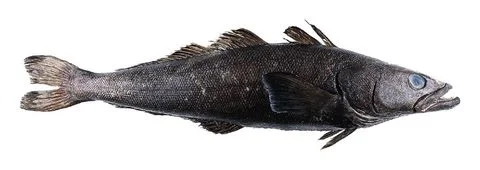
What's in a name? Patagonian Toothfish or Chilean Seabass?
Renaming your product or company may be the start of something big.
Sure the Patagonian Toothfish had a great sense of humor and a charming personality, but thanks to its frightening name, most people never gave it a second look. That is until it got rebranded by marketer Lee Lantz in 1977 as the Chilean Seabass.
Starting as a fish stick filler and eventually becoming a favorite entree of 5 star restaurants, demand grew so quickly that the species went from near obscurity to near extinction, being almost wiped out in the course of a decade.
Of course that huge demand wasn't solely based on it's new brand name. Chefs liked it because it was versatile and worked with almost any seasoning and it was flaky and mild and almost impossible to overcook. Consumers liked it because it sounded exotic and tasted delicious.
When Lantz coined the name, the fish had virtually no existing equity and a negative image in its current market of South America. It tasted bland. It was ugly too. He created a market for it by renaming it and importing it into the U.S.
Renaming isn't always a simple task or an easy solution, however. With a product or company that is struggling already, or has a lot of existing equity, a renaming process can be a minefield according to Killian Branding. http://www.killianbranding.com/whitepaper/how-to-rename-a-company/
Or renaming could create such strong demand that it even brings in pirates. Do you have a Patagonian Toothfish in your lineup?
To learn more about the Chilean Seabass, check out the links below.
According to Ethiciurean.com: "Until the 1990s, it was more or less unknown to most of the world. By 2002, stocks had been depleted so much that the National Environmental Trust launched a preservation campaign called "Take a Pass on Chilean Sea Bass" and the Monterey Bay Aquarium's Seafood Watch eventually added it to its "avoid" list."
Reveries.com references the book “Hooked: Pirates, Poaching and the Perfect Fish,” by G. Bruce Knecht, - See more at: http://www.reveries.com/2006/05/patagonian-toothfish/#sthash.PKkzzktY.dpuf for more info.

Patagonian Toothfish
Great content is king. Stop bragging about yourself.
I loved this article by John Hall and wanted to share it with you. I think there are some really good thoughts in here about creating web content that your audience will find useful, instead of creating self promotional gunk full of searchable keywords. I hope you like it too. My favorite part is where the writer says:
"While wandering around a new city, you bump into me. You ask for directions. I reply by explaining that I’m exceptionally talented, intelligent, and handsome (which you’d already observed, of course). Also, you should buy this thing I’m selling. Oh, and please tell your friends how wonderful I am.
If it seems ridiculous in real life, why is this scenario so common in the digital content world?
Nobody likes a narcissist, yet the social media landscape is full of companies bragging about themselves."
http://www.forbes.com/sites/johnhall/2013/10/27/this-is-whats-wrong-with-your-content/